


Built on Decades of Industrial Engineering
FARST Hydrogen is commercialising a patented process that makes low-carbon hydrogen the most practical and lowest-cost option for AI infrastructure and industrial decarbonisation.
Our mission is to make low-carbon hydrogen the default choice for industrial energy — not because of subsidies, but because it is the most cost-competitive option available.
FARST Hydrogen (operating as Cadchem Inc) develops the Fluidised Autothermal Reforming Syngas Technology — a patented process for producing hydrogen from natural gas with pre-combustion carbon capture integrated directly into the process. No bolt-on systems. No noble metals. No external oxygen supply.
The result is a system that achieves greater than 95% CO₂ capture at a levelised cost of hydrogen as low as $1.18/kg — making FARST the most cost-effective pathway to low-carbon hydrogen at commercial scale today, with eligibility for the US 45V hydrogen production tax credit.
Why Hydrogen Matters
A $1 trillion market — still waiting for a cost-competitive solution
Hydrogen is the only scalable, energy-dense fuel that can decarbonise industrial heat, long-haul transport, and on-site power generation where electrification is not practical or not available.
Demand is accelerating. Policy support — through mechanisms like the US 45V production tax credit — is in place. Yet today, less than 2% of the world's hydrogen supply is produced with low carbon emissions. The gap between ambition and reality is a commercialisation gap, not a technology gap — and FARST closes it.
Evolved, Not Experimental
Most low-carbon hydrogen technologies are still in development — expensive to build, unproven at scale, and dependent on external infrastructure. FARST is different. The core chemistry has been operating in industrial refineries for over 75 years.
We did not invent new science. We took proven fluidised bed catalytic cracking (FCC) architecture and applied it to a new purpose: producing hydrogen from natural gas with pre-combustion CO₂ capture built into the process. The result is a system that achieves >95% carbon capture at a cost that is competitive with unabated grey hydrogen today.
- No noble metal catalysts — uses commercially available sorbents
- No external oxygen supply — heat-balanced autothermal design
- No bolt-on CCS equipment — capture is inherent to the process
- 75+ year track record for the core reactor architecture
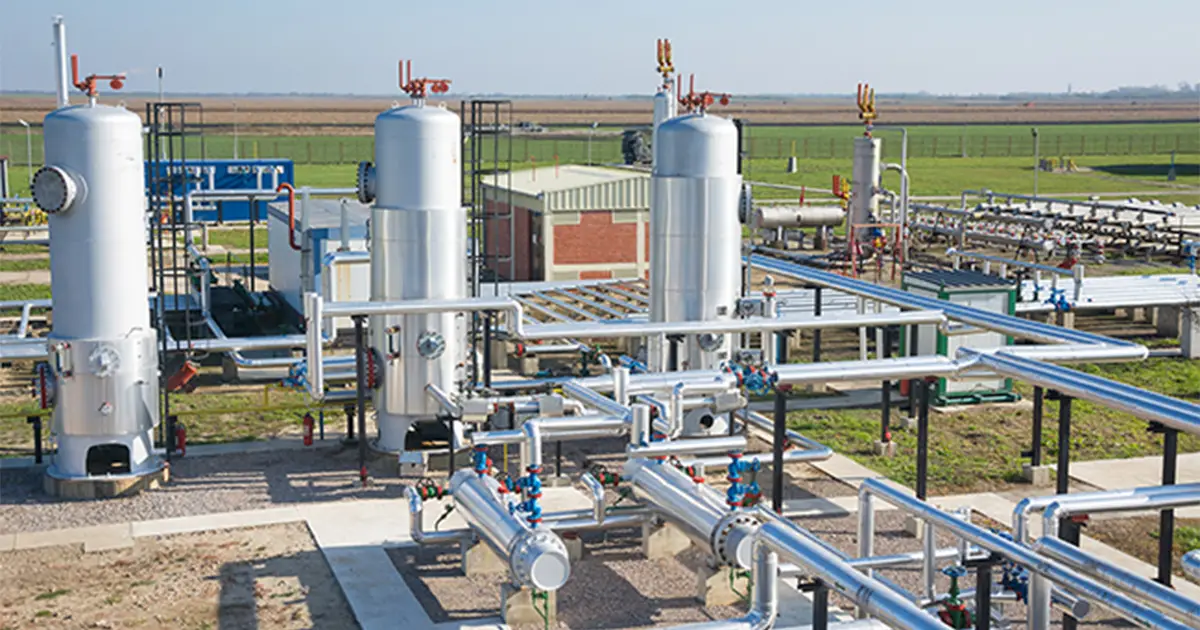
FOAK, Not First-Time
A first-of-a-kind hydrogen plant built on proven industrial architecture
FARST's first commercial plant will be a FOAK (First-of-a-Kind) project for this specific configuration — but it is not a first-time experiment. Every major engineering system, catalyst type, and process stage has a comparable commercial reference in the refining and gas processing industry.
That means operators, lenders, and insurers can model the technical risk using established frameworks — not laboratory projections. It means contractors can build it. And it means FARST can deliver a fully operational facility within standard project timelines.
De-Risked Build
Every process stage has a proven industrial analogue. No novel materials or unvalidated chemistry.
Modular Delivery
Scalable from 2 to 1,000+ tonnes of hydrogen per day. Right-sized for your load without excess capital.
Simplified Integration
Designed to connect to existing natural gas infrastructure. No new pipelines or special utility requirements.
Ready to Deploy
Patented process ready for licensing and project development. No grid queue. No wait for electrolysers.
Patrick Cadenhouse-Beaty
Four decades of industrial process engineering
FARST was invented by Patrick Cadenhouse-Beaty, an engineer with over 40 years of experience in fluid catalytic cracking (FCC), refinery operations, and syngas chemistry. Patrick spent his career designing and optimising the industrial processes that underpin global oil refining — and recognised that the same engineering principles could be redirected toward a new purpose.
"The FARST process is not an invention from scratch. It is the deliberate application of proven industrial chemistry to a new challenge — making hydrogen cheap enough and clean enough to compete everywhere."
Rather than pursuing novel catalysts or unproven reactor configurations, Patrick adapted the regenerative thermal loop of FCC technology — an architecture with a 75-year commercial track record — to achieve autothermal reforming with integrated pre-combustion capture. The result is a process that operators and financiers can understand, model, and deploy with confidence.
FARST Hydrogen was incorporated as Cadchem Inc in Casper, Wyoming, to commercialise this work and bring the technology to market across North America and beyond.
What FARST Stands For
Fluidised Autothermal Reforming Syngas Technology
Each word in the FARST acronym describes a core design principle of the process. Together they capture what makes FARST technically and commercially different from conventional hydrogen production pathways like SMR (steam methane reforming) or electrolysis.
The fluidised bed architecture enables continuous operation and integrated capture. Autothermal reforming eliminates the need for external heat input or oxygen supply. The syngas intermediate is efficiently converted to hydrogen and CO₂, with the CO₂ stream concentrated and separated before combustion — achieving capture rates above 95% as an inherent feature of the process design.
Principles That Guide Us
Commercial pragmatism, engineering rigour, and long-term thinking.
Proven Over Experimental
We build on 40 years of industrial process engineering heritage — not laboratory science. Every design decision is anchored in known, deployable chemistry.
Cost Is Not Optional
The energy transition only succeeds at scale if clean energy is also cheap energy. FARST is designed from first principles to achieve the lowest possible cost of hydrogen — not just the lowest carbon.
Deployable at Commercial Scale
From 2 to 1,000 tonnes of hydrogen per day, FARST is designed to scale within standard project construction timelines — without the queue times that affect grid-dependent energy infrastructure.
FARST Hydrogen: Advantages, Costs, and Benefits
Common questions from investors, developers, and industrial operators
FARST achieves a Levelised Cost of Hydrogen (LCOH) as low as $1.18/kg — competitive with unabated grey hydrogen and well below green hydrogen produced via electrolysis, which currently runs $3–7/kg depending on electricity prices. The cost advantage comes from three sources: autothermal heat balance (no external energy input), use of commercially available catalysts and sorbents (no expensive noble metals), and integrated CO₂ capture (no separate CCS infrastructure to build or operate). The 45V hydrogen production tax credit provides further improvement to project economics for US-based production.
Carbon capture in the FARST process is pre-combustion rather than post-combustion, which makes it fundamentally more efficient. The natural gas is converted to a syngas (hydrogen and CO) in the fluidised reforming stage, and the CO₂ is separated from the hydrogen-rich stream before any combustion takes place. This means we are separating CO₂ from a concentrated, high-pressure stream — not trying to scrub dilute CO₂ from hot flue gas after the fact. The result is capture efficiency above 95% as an inherent feature of the process design, not an add-on.
FARST is designed to be modular and scalable from approximately 2 tonnes per day (suitable for smaller industrial or distributed applications) up to 1,000+ tonnes per day for large centralised hydrogen supply. Plant construction follows standard EPC (Engineering, Procurement and Construction) timelines for comparable industrial process facilities — typically 24–36 months from final investment decision for commercial-scale plants. This compares favourably to grid-scale electrolysis, which faces compounding delays from electricity connection queues, electrolyser delivery lead times, and renewable energy project timelines.
Yes. FARST hydrogen qualifies for the 45V clean hydrogen production tax credit under the Inflation Reduction Act. The level of credit depends on lifecycle greenhouse gas emissions measured in kg CO₂e per kg H₂ — with the highest tier ($3/kg) available to production pathways achieving emissions below 0.45 kg CO₂e/kg H₂. FARST's pre-combustion capture architecture is designed to achieve lifecycle emissions well within the upper tiers of the credit, making US-based FARST projects among the most economically attractive low-carbon hydrogen projects currently available to developers.
FARST hydrogen is suited to any application requiring a reliable, scalable supply of low-carbon hydrogen on-site or in close proximity to the point of use. Priority applications include AI data centre power generation (via hydrogen fuel cells or gas turbines), industrial decarbonisation (replacing grey hydrogen in refining, ammonia, and chemical production), long-haul heavy transport (fuelling hydrogen truck fleets), and clean power generation for remote or off-grid industrial operations. FARST plants can be sited adjacent to natural gas infrastructure, removing the need for hydrogen transport pipelines.
Ready to explore what FARST can do for your project?
Whether you are an investor, energy developer, industrial operator, or potential partner, we would welcome the conversation.